

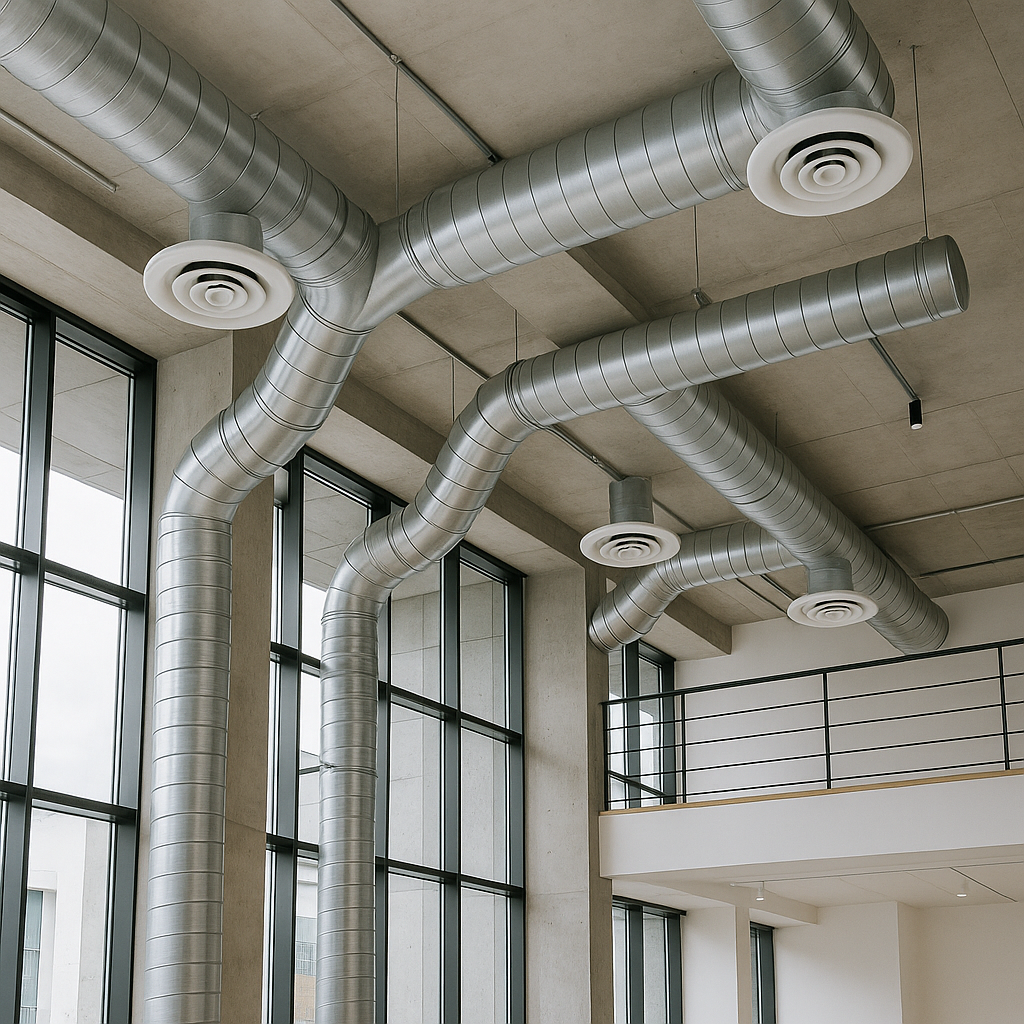
MECHANICAL DESIGN
It all begins with an idea.
A well-executed HVAC design balances human comfort, energy performance, and project practicality. At its core, HVAC engineering focuses on creating indoor environments where occupants feel comfortable through consistent temperature control, proper air distribution, and effective humidity management.
Equally important is ensuring the system fits the unique constraints of the building—its layout, architecture, existing infrastructure, and functional needs. Every project is approached with the owner's preferences in mind, whether the priority is flexibility, quiet operation, aesthetics, or long-term efficiency.
A successful HVAC design also requires careful budget consideration. Engineers evaluate multiple system options, weighing upfront costs against long-term operating savings to recommend solutions that provide the best overall value. Energy-efficient strategies, such as optimized equipment selection, smart controls, and right-sizing, help reduce utility expenses while supporting sustainability goals.
From comfort to cost control, HVAC design integrates temperature management, humidity regulation, energy performance, and the owner’s vision into a cohesive system tailored for the building’s needs.